



Know your body.
Make the appointment you have been putting off. Bring the four questions. Hydrate. Move. Get tested if you can, even if the family history looks clean. Nothing on this page matters if you are not here for it.
I almost died in January 2026 with no pain and no warning. Here is what I found in my blood, what I found in myself, and what I am doing with the time I was given back.
Blood clots in both lungs. Nine days in the hospital, four of them on respiratory life support. One step from a ventilator. This page is the whole story, the science behind it, and the way I live now.
Watch the full interviewTwelve flights in two months. Then, a few weeks after I landed, I got winded going up my own stairs. I have climbed Kilimanjaro. I had not had a cold in years. I drove myself to the emergency room thinking I was wasting their time.
Blood clots in both lungs, too many to count. By the time I got inside from the garage, my blood oxygen was at 78. Nine days in the hospital, four of them on high-flow oxygen, the highest level of respiratory oxygen life support they had for me. I was tired and winded on my own stairs, but I had no pain and did not recognize what was happening.
Months later, follow-up testing found that I carry one copy of Factor V Leiden, an inherited clotting condition I had never heard of, that produces no symptoms on its own, and that I had carried through fifty-six countries and up a mountain without knowing.
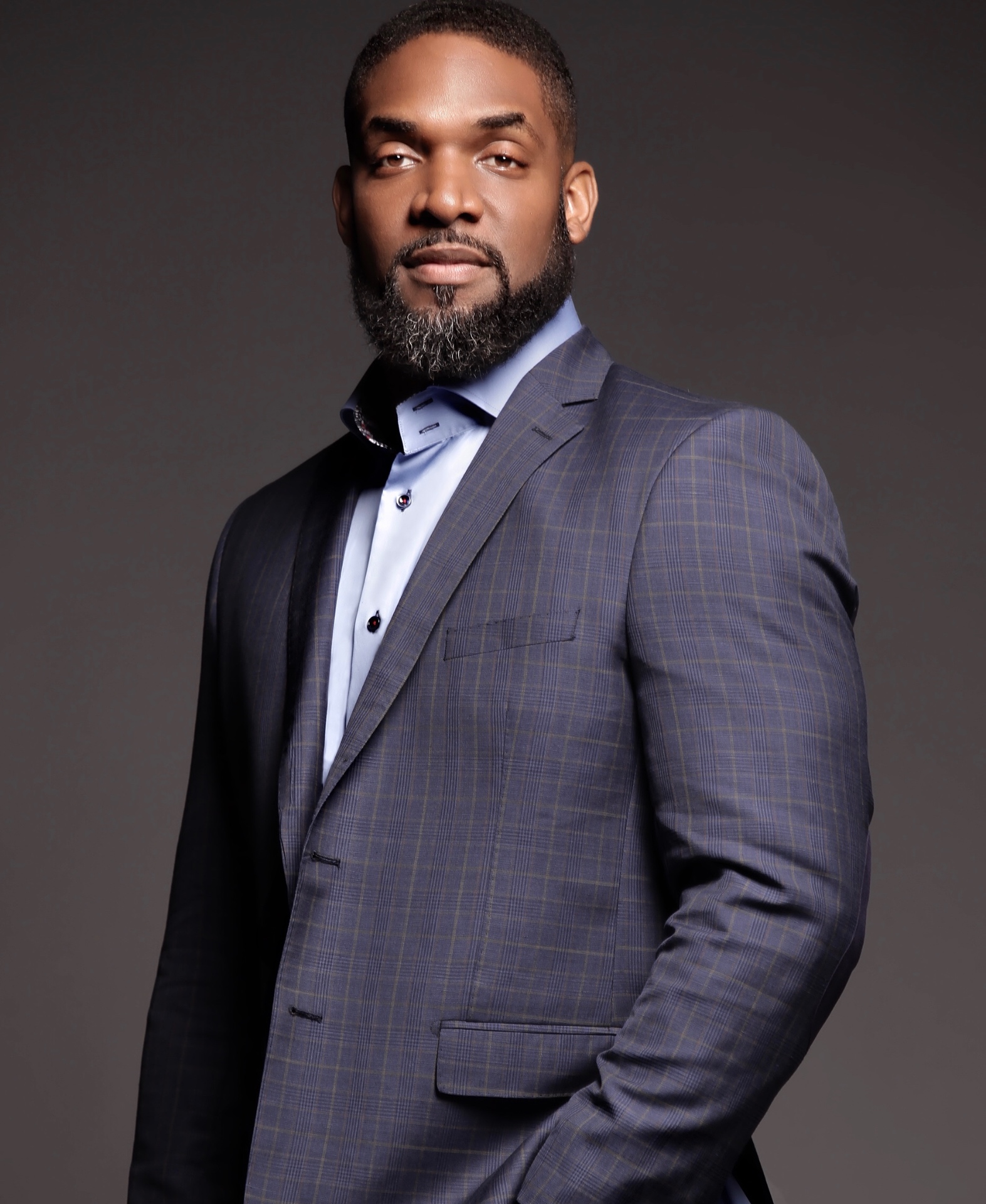
I sat down with Aaron Faulkner and told the whole thing once, on camera.
The interview is on its way.
Heavy D. Chris Bosh. Jalen Hurts. David Bloom, the NBC news reporter who lost his life to clots in his lungs after days of sitting still in the field. Blood clots keep finding people the world thought were perfectly healthy, and they do not care what a person looks like. Some of these clots show up after a long flight. Some show up after sitting still too long. Some show up with no reason at all. Every time it happens to a public figure, a lot of people learn for the first time that a healthy person can carry clots in their lungs and feel fine. That was me. The attention passes. The condition does not. So this is the conversation we need to have.
On the fourth day, on the highest level of respiratory oxygen life support they had, I was not thinking about money. Whatever a life's work adds up to on paper, it did not weigh anything in that bed.
I was thinking about the shelf.
The books I had started and never finished. The courses I taught twenty years ago, sitting on a hard drive somewhere. The children's books. The documentaries. The stages I had not stood on yet. The interviews I had not given. The wisdom I had collected over thirty years and never handed to anyone.
I had been telling people for years that tomorrow is not promised. I found out in that room what the sentence weighs.
So I made a decision before I knew whether I was going home. No more hard drives. Whenever I leave, fifty years from now or tomorrow, I am going to leave as empty as I can be. Everything I have, out of me and into the world.
That decision is why this page exists. It is why the book exists. And it is why Jay Cameron's Passport to Freedom became something more than a travel brand.
Everything in this section is my experience and my reading of public health sources, linked as I go. It is not medical advice. Check it with your own doctor.

Factor V Leiden is named after a town. Leiden sits in the western Netherlands, and its university, founded in 1575, is the oldest in the country. In 1994, Rogier Bertina and his colleagues at the Leiden University Hospital published a paper in Nature showing that the blood of people who did not respond to their body's own clot-off switch carried one changed letter in the factor V gene. One letter, out of thousands. The condition took the town's name, the way a lot of medical findings do.
The V is only its place in the numbering of the clotting factors, the fifth one identified. The Leiden part is the town. Together they are a record of the place someone finally looked hard enough to see the thing.
What that group measured in the Dutch population was a carrier rate of about two percent, at least ten times higher than every other inherited clotting risk known at the time. It is still the most common inherited clotting condition among people of European descent, and in some places it runs far higher. Studies in Greek Cypriot and other Eastern Mediterranean populations have found more than one carrier in ten. Across Europe the pattern is uneven, high across a broad band and low in pockets. That is what a single old change in one person looks like on a map.
SourceNature, 1994: Bertina and colleagues, the Factor V Leiden discovery
Some people are born with a change in their genes that makes their blood clot more easily than it should. These are called inherited clotting conditions, or thrombophilias. The most common is Factor V Leiden, a single misspelling in one gene that keeps your blood from fully switching off clotting once it starts. Others include the prothrombin gene mutation and deficiencies in the body's natural anticoagulants, protein C, protein S, and antithrombin.
Here is what they have in common. None of them cause symptoms on their own. You cannot feel them. They do not show up on a routine physical. Most people who carry one find out the way I did, after a clot, or never find out at all because the clot was blamed on something else.
They are also not spread evenly. Factor V Leiden is found in roughly one in twenty people of European descent, about one in fifty Hispanic Americans, about one in a hundred Black Americans, and fewer than one in two hundred Asian Americans. It traces back to a single ancestor tens of thousands of years ago, which is why it follows the map of where that person's descendants went. In a country where most of us carry more than one ancestral line, a condition labeled as belonging to one group can be sitting quietly in another. I am a Black man who has spent eight years tracing my roots to Africa. Mine came through the part of my family history I never once looked at for a clot.
SourceNIH: Factor V Leiden and individual treatment decisions
Look at me and you would not guess that I carry a genetic mutation with European origins. My DNA reads about twenty-five percent European ancestry, and that comes from both sides, my mother's and my father's. This is not a number I am guessing at, and it is not a mystery I am still trying to solve. It is genealogy. I know who these ancestors are and I know about their existence.
And ironically, not all of it came out of slavery. Some of it may have. I had great-grandmothers with direct European ancestry, and the lines on both sides carry names. I learned a lot about those people, and I did not expect any of it to explain a clot.
That is the part I want you to sit with. Factor V Leiden is described as a condition of European descent, and here it is, sitting in a Black man who has spent eight years tracing his roots to Africa. The label on a condition tells you where a change first showed up a long time ago. It does not describe the person standing in front of you. Ancestry is not a single line, and a mutation does not check which box you fill in.
Read this part twice. Black Americans have the highest rate of dangerous venous blood clots of anyone in this country, and we carry Factor V Leiden the least. The reasons are still being worked out: other genes specific to us, how and where we live, and a medical system that does not always look as hard when we are the ones describing the pain. The lesson is not to test for one gene and stop there. The lesson is that clotting hides, it is underdiagnosed in the people most at risk, and the only way to know is to ask and to get tested if you can.

The gene loads the risk. Something else pulls the trigger. The most common triggers:
I had one copy of the gene and twelve flights in two months. That is how a silent condition became clots in both lungs. And do not file this under old age. Age raises the risk, but these clots are turning up in people in their twenties and thirties too.
SourceCDC: blood clot risk factorsResearch: pulmonary embolism in adults 25 to 44

Mine was shortness of breath and nothing else. If you have any of these, especially after a long journey or a long stretch of sitting, go in now. Do not wait to see if it passes. Do not wait for pain.
SourceCDC: blood clot signs and symptoms
If you can get tested, get tested. I am not going to tell you that you have to, and I am not going to tell you that you do not need to. Here is the thing: you do not really know what your family medical history says unless somebody in it had a clot. Nobody I know of in my family ever had a clotting problem. My family file looked clean. And a lot of people in it had strokes.
Most strokes are clots. About 87 percent of them happen when a vessel carrying blood to the brain is blocked. And a clot does not always form there. About one in four people has a small opening between the upper chambers of the heart that never closed, and most of them never find out. In rare cases a clot that starts in a leg vein crosses through that opening, leaves the vein side, and travels to the brain.
I am not going to oversell that. Research on Factor V Leiden and stroke points in the same direction without landing on one answer, and a stroke in your family does not mean you carry a clotting condition. My point is smaller and it is still the point: I read my own family history as clean because I was only looking for clots. When you ask the oldest relative you have what happened, ask about clots and ask about strokes.
The test is a simple blood draw ordered by a doctor, called a thrombophilia panel. A consumer ancestry kit is not a diagnosis. Testing is worth asking for even when nothing in your family looks like a clotting problem, because that is exactly what mine looked like. It pays off most where the history is loud: you or a close relative had a clot, a clot with no obvious cause, a clot at a young age, or repeated pregnancy loss.
And if you carry it, tell your children. I told mine to go get checked. It did not start with you and it does not end with you. Each child of a carrier has a fifty percent chance of inheriting it.
SourceAmerican Stroke Association: ischemic stroke and clotsAmerican Heart Association: patent foramen ovaleAmerican Stroke Association: strokes of unknown causeResearch: inherited thrombophilia and arterial ischemic stroke
Clotting runs in bloodlines. If a parent, grandparent, aunt, or uncle had a leg that swelled, a lung that filled, a stroke at a young age, or a sudden death the family filed away as one of those things, that is not gossip. That is your medical history, and you are allowed to go get it. Ask the oldest relative you have. Write down what they tell you. Bring it to your doctor.
Clotting is partly what your genes say and partly what your body is doing at the moment. Blood that keeps moving stays where it should. Blood that sits begins the problem. That is why the same long flight is ordinary for one person and dangerous for another.
The calf muscle is the engine. Every time you stand, walk, or raise your heels, it squeezes the deep veins in your leg and pushes blood back up toward your heart. Sit still for hours and that pump does not run. This is why someone who trains and someone who does not are not starting from the same place, and why extra movement is never wasted.
And it is not only the calf. The leg is the most common place a clot starts, but it is not the only place. Clots can form in the hip and the pelvis, and they can form in the abdomen. Anywhere blood slows down and sits, the same problem can begin.
So the fix is not complicated. Move often. Move on purpose. Build the calves and keep using them. Hydrate before you are thirsty, and before a journey, not just during it. None of this is a treatment and none of it replaces a doctor. It is the part that is entirely in your hands.
SourceCMAJ: clots in the hip and pelvis (iliofemoral DVT)
I built a company on getting people onto planes, and I am still getting on them. I just do it differently now. The whole point is circulation.
I am on anticoagulants for the rest of my life. That is where my doctors and I landed, and it is my decision.
Let me be plain about it. I do not like medications. I am not trying to be politically correct here, and I am not a fan of the pharmaceutical industry either. A lot of people do not like medications, because taking one means admitting that something is wrong. But there is a place when they are warranted. Even with me not liking them.
I did my own research and really looked through it. I was taking garlic. I was taking omega-3s. I was doing all of those natural things that people say to do, and this clot still came. I had no obvious warning symptoms leading up to it.
This is not me telling you to take a medicine. It is me telling you where I came out. I would rather take a pill every day than go through what I went through again.
My plan is not everyone's plan. Carrying one copy of Factor V Leiden does not automatically mean lifelong medication. Treatment duration depends on your clot history, the risk of another clot, and your bleeding risk, reviewed with your clinician.

Garlic and omega-3 supplements are not proven substitutes for prescribed anticoagulants to prevent or treat venous blood clots. Garlic supplements can increase bleeding risk, and omega-3 supplements may interact with anticoagulants. Tell your doctor or pharmacist what you take, including supplements. Do not stop or change prescribed medication on your own.
SourceNIH: garlic supplement safetyNIH: omega-3s and medication interactions

A clot without obvious warning can leave you thinking differently about your body. Recovery can be emotional as well as physical. Some people experience anxiety, low mood, or fear of another clot after a pulmonary embolism. If those feelings persist or interfere with daily life, ask your healthcare team for support.
SourceResearch: emotional recovery after pulmonary embolism
Anticoagulants help prevent new clots from forming and existing clots from growing while the body breaks them down. A major potential side effect is bleeding, including serious internal bleeding. Treatment balances that risk against the danger of another clot. Seek immediate medical care after a significant head injury or for severe or uncontrolled bleeding.
SourceNHS: anticoagulants and bleeding

Blood clots and the need for anticoagulants can interrupt or end a professional athlete's career, particularly in contact and collision sports. A major hit can cause serious, potentially life-threatening internal bleeding. That does not mean every bleed is untreatable or every career must end. Return-to-play decisions require individual assessment with the treating specialist. If you play a sport where you get hit hard, have that conversation with your doctor before the hit. Do not stop or skip medication to play.
What nine days taught me that thirty years of business did not.
I did not ignore the warning signs. I paid attention to a small one, being winded on my own stairs, when it would have been easy to sleep it off. If I had waited for pain, I would not be writing this. Whatever your body has been saying quietly, that is the signal. Not the scream.
There are too many successful people who are struggling, trapped by what they built. Their body is telling them something is wrong, and there is the next invoice, the next engagement, the next project. I was one of them. The money was good and the schedule was full and I had not had a real break in years.
If I were the only person running my company, it would have gone out of business in January 2026, because I could not fly. It did not miss a beat, and this became one of our biggest years, because of the team around me here and around the world. I had to let go of control. It turned out the business was stronger without my hands on everything.
It does not mean giving up business. It means looking at every commitment and asking which ones earn their place. I have cut things that did not. What is left gets all of me.
I know people in their twenties and thirties who went to sleep and did not wake up. One was in the middle of a journal entry and wrote, I will get to it tomorrow. This is not morbid. This is to light a fire. If you feel it, do it. You do not have to wait until you are sixty.
Everyone has an opinion about what you should do with your life. On your last day, even with everyone you love around you, it is you and your thoughts. Live so that when that day comes, you can say you did all you could, and you enjoyed every bit of it.

Jay Cameron's Passport to Freedom
I started Jay Cameron's Passport to Freedom to take people around the world, because I know what exposure did for me. I was living in a bubble, and stepping outside it changed how I thought, how I spoke, and what I believed was possible.
After January 2026 it became something more. I am still going to take people around the world. Now I am also going to show people how to live. Not someday. Now. Here is where it starts.
Make the appointment you have been putting off. Bring the four questions. Hydrate. Move. Get tested if you can, even if the family history looks clean. Nothing on this page matters if you are not here for it.
Put rest, training, and medical care on the calendar the way you put revenue on it. When your body asks for a break, give it one before it stops asking.
Write down every commitment you carry. Next to each one, ask: does this earn its place? Cut what does not, and do not fill the space back up. That space is where the real work happens.
Ask yourself what would stop if you were out for nine days. Whatever the answer is, that is your next project. A business or a life that only works when you are standing in it is not freedom.
Pick the one thing you have carried around unfinished the longest. Give it a date this quarter. Then the next one. No more hard drives.
Travel. Read outside your lane. Sit with people who see the world differently than you do. The more I saw, the more I realized how much of my thinking someone else had handed me. Exposure changes everything.
If you feel it, do it. Do not wait to be retired. Do not wait for the plane to pass. Do not wait for everyone to agree with you. Somebody always has an opinion, and you are the one who has to live with the result.
The Book
How Almost Losing My Life Taught Me to Stop Wasting It
The whole story, the science, and the way forward, in one book. The night it almost ended, the nine days, the diagnosis I did not see coming, the ancestry I had never looked at, and everything I took off the shelf after.
Coming December 2026The National Blood Clot Alliance is the organization I trust on this. Everything you need, from signs and symptoms to risk assessment to finding a specialist, is at Stop the Clot:
Visit Stop the ClotMarch is Blood Clot Awareness Month. I will be using it to push this conversation as far as it will go. Join me.